Maria Wakeham
Studied: Classical Civilisation, English Language, English Literature, Philosophy + EPQ
Progression: Classics, University of Cambridge
Apply here for September 2026 entry. Please note our Priority Application Deadline for September 2026 entry was 23:59 on Friday, 5 December 2025. Any applications received after this date will still be considered if places remain available.

Classical Civilisation is the study of ancient Greek and Roman cultures. The ultimate humanities subject, it comprises a wide range of disciplines, from literature to art and archaeology, to politics, history and economics, mythology and philosophy.
You will study works of epic and lyrical poetry, works of philosophy, tragedies, comedies, and you will develop an understanding of how these disciplines interrelate in order to think critically and creatively about the foundations of Western culture and society.
Many students progress to degree courses in Classics. It is also excellent preparation for degrees in Literature, History, Politics, Philosophy, Law and Drama/Theatre Studies. It is widely recognised as highly beneficial for a huge variety of career paths, including journalism, banking, politics, the creative arts, the fine art market, and academia.
Courses Available
A Level
How The Course is Assessed
100% exam
Career Pathways
Degree courses in Classics/Classical Civilisation, Literature, History, Politics, Philosophy, Law and Drama/Theatre Studies. It is widely recognised as highly beneficial for a huge variety of career paths including journalism, banking, politics and academia.
Transferable Skills
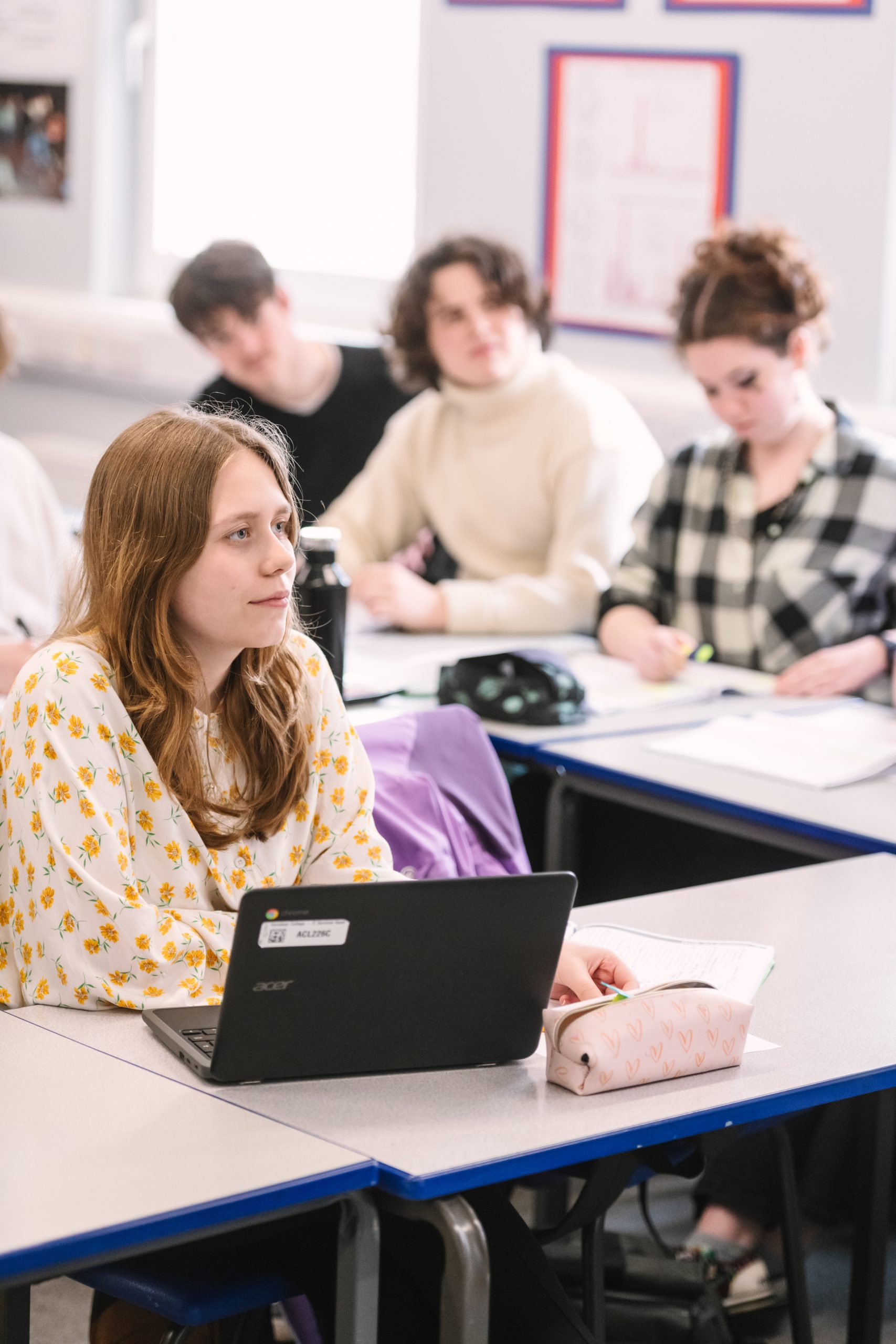
Students are able to contextualise complex source material; develop analytical and evaluative skills expressing themselves with purpose, clarity and confidence.
Other Information
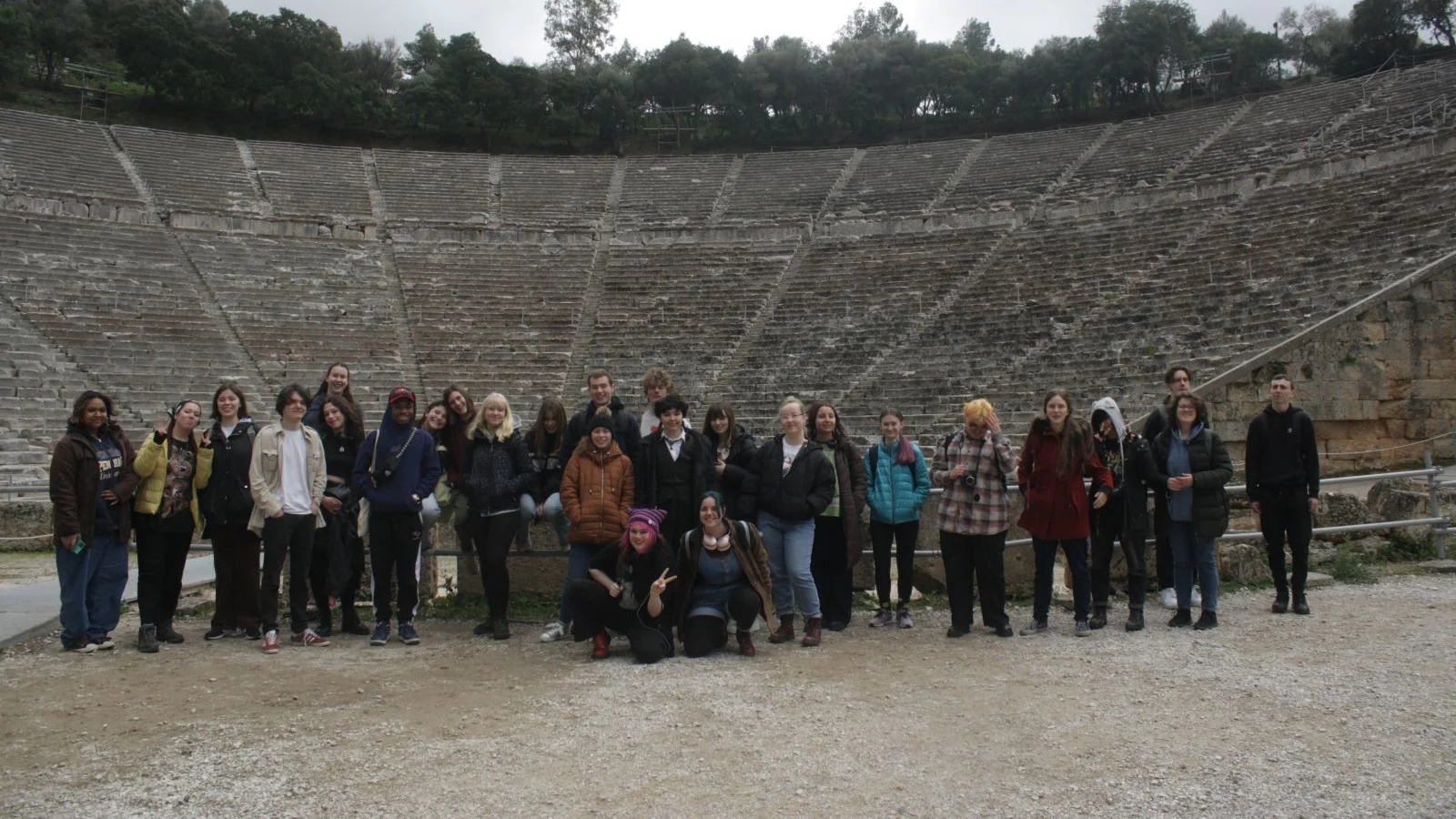
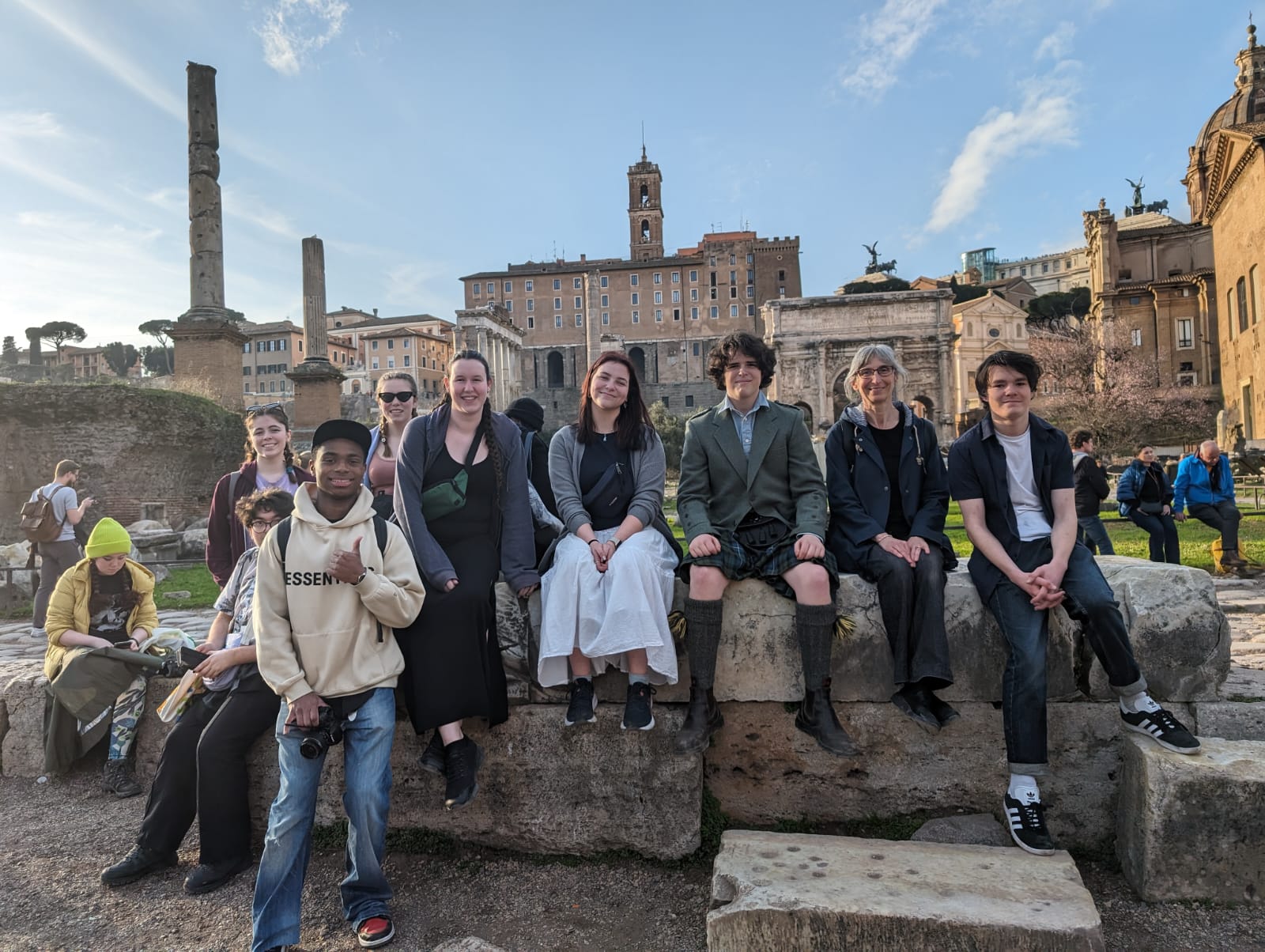
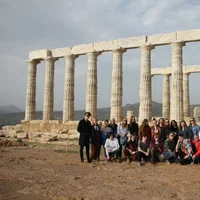
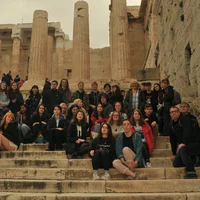
Each year there is a trip to either Rome or Athens. There are also opportunities for visits to plays, workshops and talks.
Enquiries To
Barbara Scalvini: bss@varndean.ac.uk
Studied: Classical Civilisation, English Language, English Literature, Philosophy + EPQ
Progression: Classics, University of Cambridge
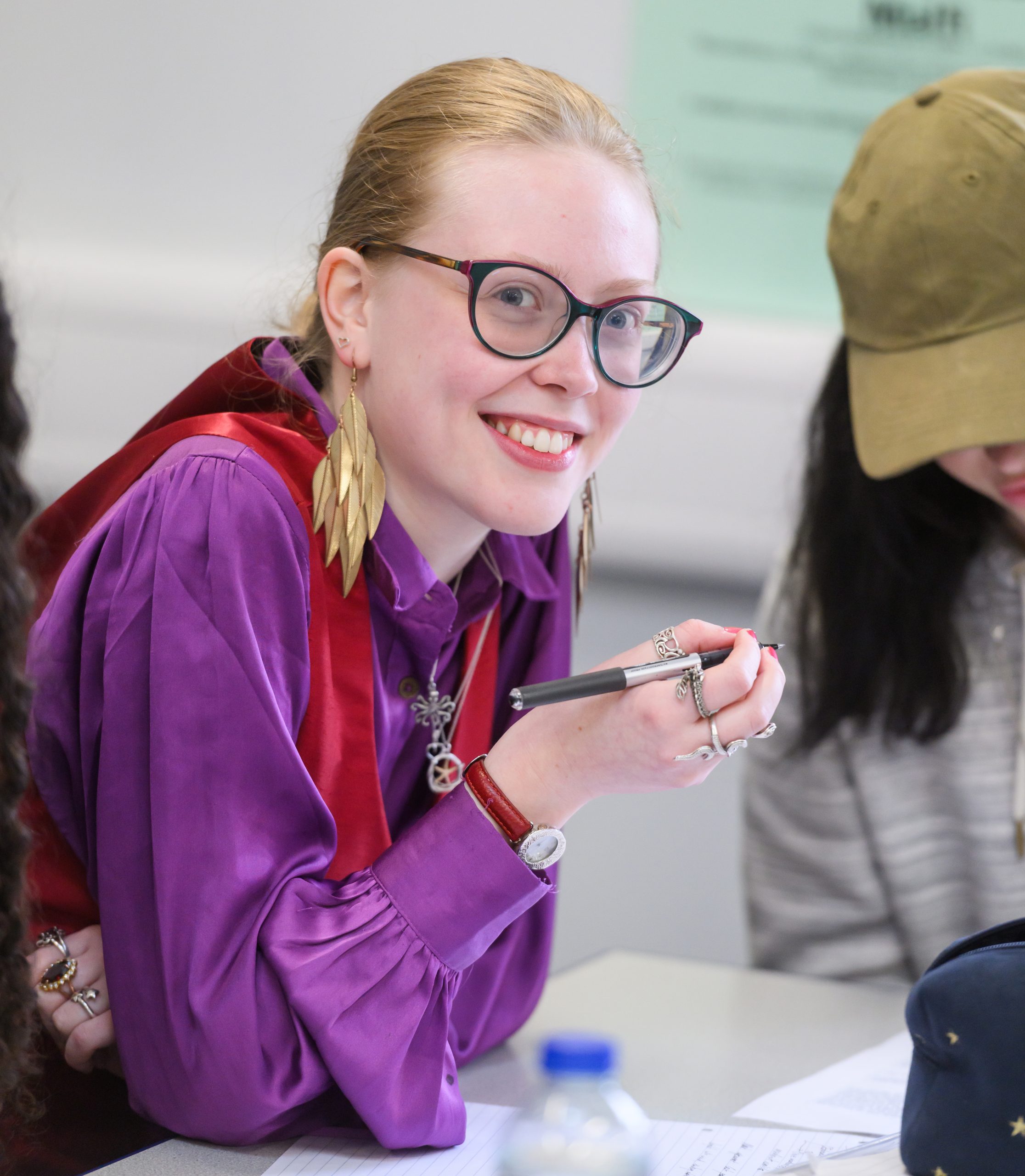
Maria left Varndean Sixth Form College in July 2025 with A Levels in Classical Civilisation (A*), English Language (A*), English Literature (A*), Philosophy (A) and Extended Project Qualification (A*). She is now studying Classics at the University of Cambridge.
Maria says: “After attending open days and taster days. Varndean felt like home immediately. Everyone I met was incredibly friendly and somehow remembered me months later! The Classics department came into my Year 10 Classics GCSE class before Christmas; when I met them again, first in July, and then again in October, they remembered me! The argument that Varndean has a ‘community feel’ is something I heard a lot in the advertisements and at the open days, and since coming here, I can confirm it’s not just lip service.
Most importantly though, I chose Varndean because I loved the library – the deciding factor was it extensive, marvellous fiction section, alongside of course its many computers, its lovely space, splendid librarians, and it has excellent subject specific texts and a lot of online material.
I knew Classics was my plan for university – I was always going to choose it, and have loved it just as much as I knew I would. Exploring the English Language course, I swiftly learned how fascinating it is – how language reflects gender identity, power dynamics, how it changes over time – I had to know more. And I couldn’t possibly do combined Lang-Lit because I wouldn’t get to learn about half as much of all the linguistic elements! Philosophy is something I’d always been interested in, prone to philosophical thinking – the sessions on the taster day were marvellous, and so choosing it was a no brainer. English Literature I loved at GCSE, especially Shakespeare, and didn’t really want to give it up.
By the time it came to the summer of Year One, I realised I wanted to write an extended essay comparing female depiction in Athenian tragedy to recent feminist retellings, and all of a sudden, my intention to not do the EPQ (on top of four essay-based A-levels) was overruled, something which I do not regret in the slightest – I have so many further questions for when I’m at university on a topic which I’ve really loved exploring.”
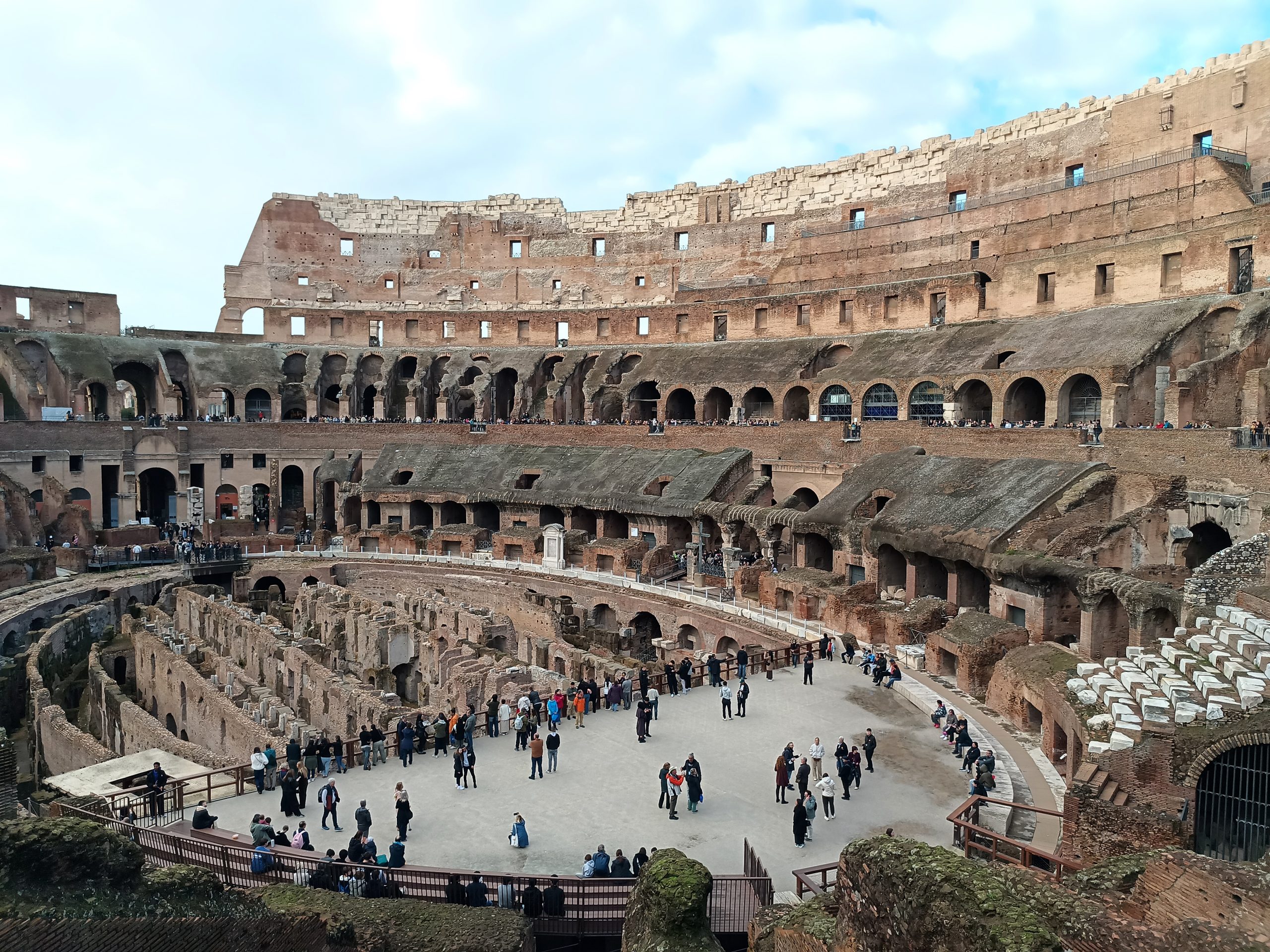
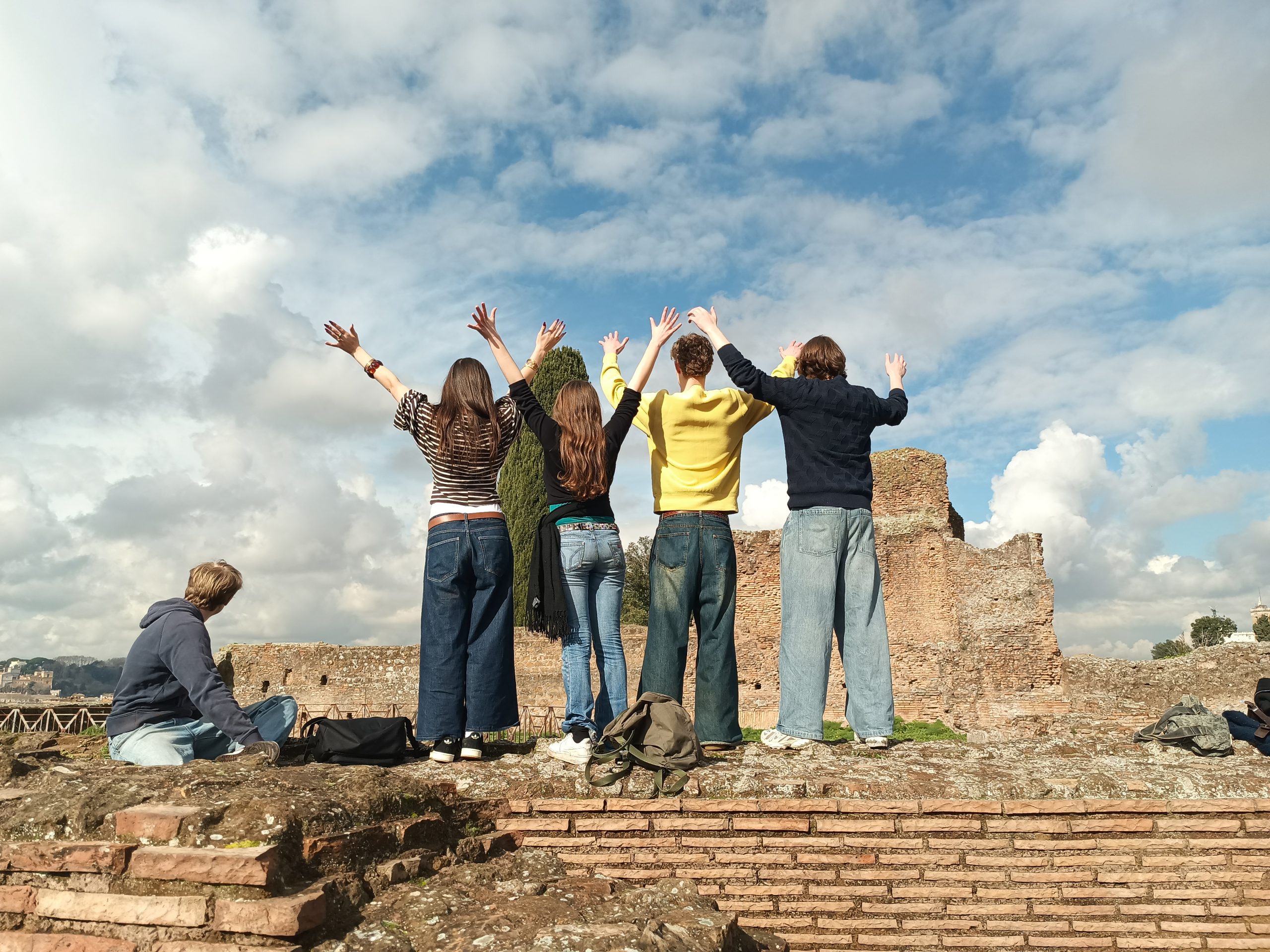
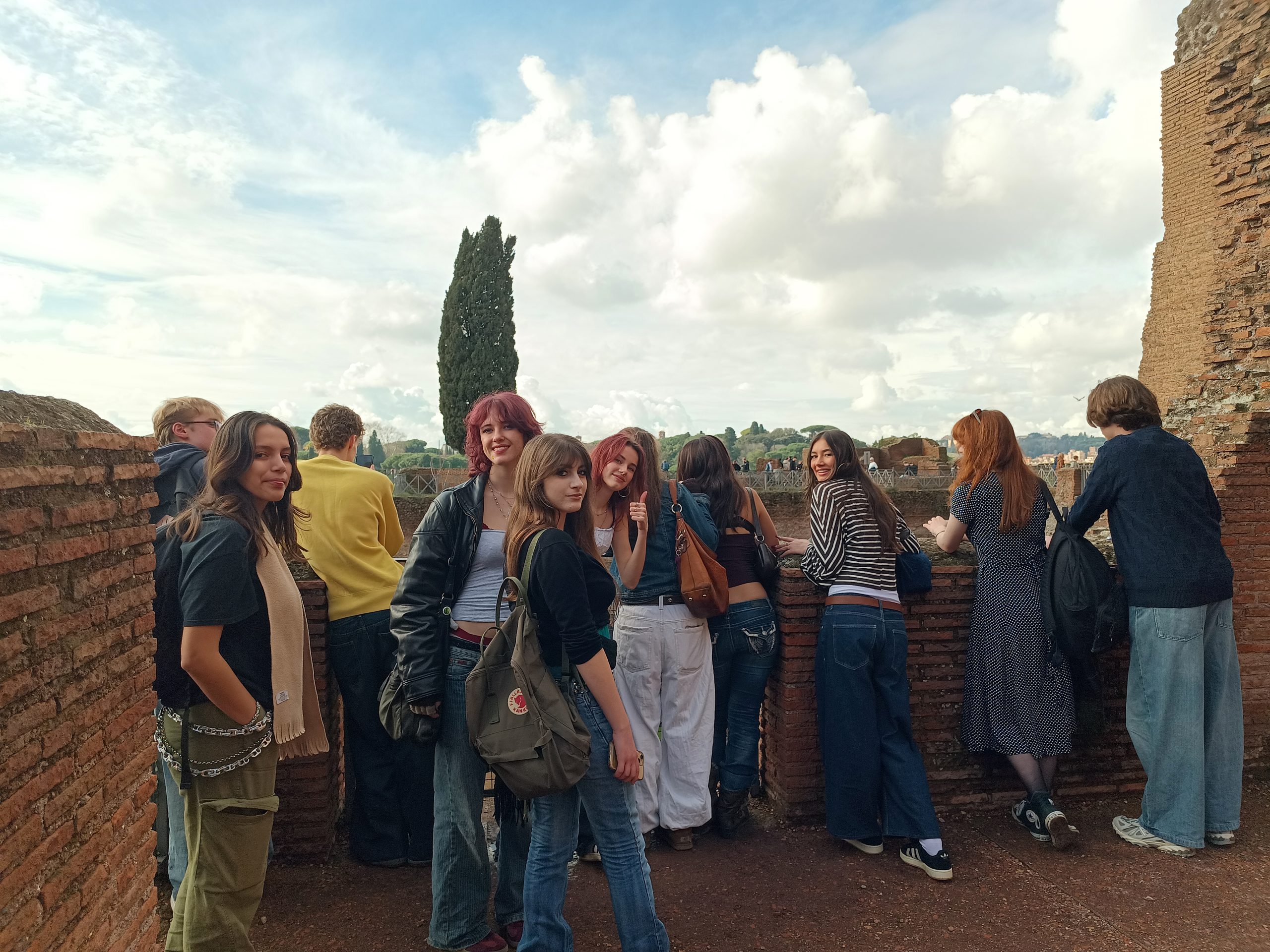
A recent trip to Rome gave our Classical Civilisation students the chance to see Roman history come vividly to life. They visited the Forum, with its public spaces for politics, religion and markets, and the Colosseum, designed by emperors to entertain the crowds.
A morning at the Pantheon brought students in touch with the fascination of pure geometry and clever craftsmanship, whilst visits to some of the earliest churches dazzled with their riot of gilt backgrounds, mosaics and marbled floors.
Seeing St Peter’s Basilica in the Vatican made everyone reflect on Rome as the Eternal City, whilst the last few hours spent walking around the remains of the port city Ostia showed the more homely, every-day Rome of bakers, millers, oil merchants, and community theatres and temples.
A special thank you to Varndean tutor, Kate, who talked us through Michelangelo’s breathtaking Pieta, and Marta, and enlivened one of the coach journeys with an Ancient Theatre quiz!
| Course | General GCSE Grade minimum entry requirements |
|---|---|
| IB Diploma or 4 A levels | A mixture of at least 7 GCSEs at Grades 9 – 6 including English, Maths and Science. |
| 3 A Levels | A mixture of at least 6 GCSEs at Grades 9 – 4 including English. |
| A mixed programme at Level 3, to include at least one vocational course | A mixture of at least 5 GCSEs at Grades 9 – 4 including English. |
| Foundation Level (Level 2) | At least 4 GCSEs at Grade 3, including English. At least one GCSE should be at Grade 4 or above. |
| Any student who has not achieved a grade 4 or C in GCSE English and/or Maths must include further study of these subjects in their programme. | |